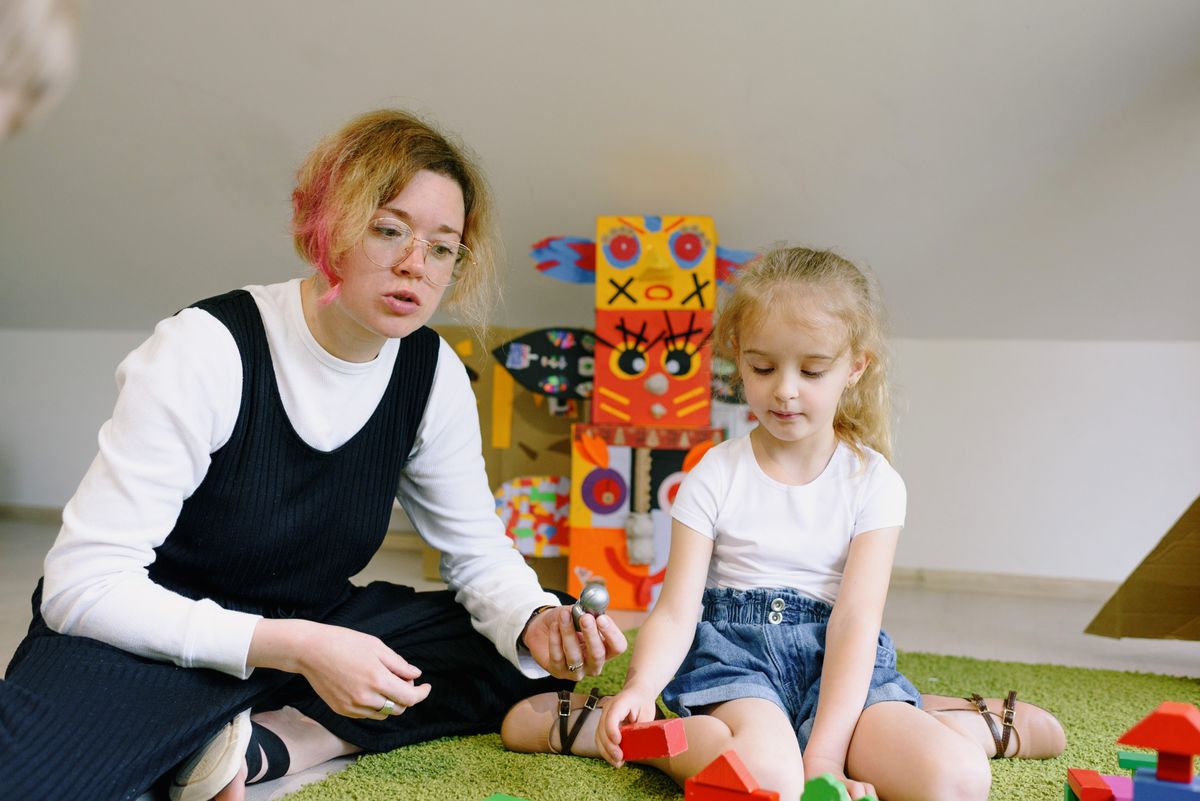
One of the first questions families ask us is simple: should therapy happen at home or at a center? The honest answer is that both work, and the right choice depends on your child, your goals and your family's routine.
This guide compares in-home and center-based ABA therapy side by side, explains who each setting tends to suit, and shows why many families choose a combination.
In-home vs. center-based ABA at a glance
| In-home ABA | Center-based ABA | |
|---|---|---|
| Where it happens | Your home, where your child lives and plays | A center designed for therapy and play |
| Environment | Familiar, with real-life routines | Structured, with fewer distractions |
| Social opportunities | Family members and siblings | Guided play with other children |
| Great for practicing | Mealtimes, bedtime, dressing and other daily routines | Group skills, focus and school-style routines |
| Family involvement | Parents can easily join and learn strategies | Parents stay informed and learn strategies to use at home |
| Travel | None | Trips to and from the center |
The case for in-home ABA
In-home therapy meets your child in their most familiar environment. Skills are practiced exactly where they'll be used: at the kitchen table, during a bedtime routine, with siblings nearby. It is often a comfortable place to start, and it makes it easy for parents to see strategies in action. Learn more about our in-home ABA, or read What Is In-Home ABA Therapy?
- Comfort: your child learns in a space they know.
- Real-life practice: routines are taught where they happen.
- Family learning: caregivers can practice alongside the therapist.
The case for center-based ABA
Our center-based therapy offers a structured space with fewer distractions and rich opportunities for peer interaction. Predictable routines and dedicated therapy areas help many children stay focused and build social skills. You can take a look inside our Bronx and Brooklyn centers.
- Structure: predictable schedules and dedicated learning spaces.
- Peers: guided chances to play and communicate with other children.
- Preparation: practice with group routines that carry over to school.
How to decide
- Consider your child's comfort. Does a new, structured space feel exciting or overwhelming?
- Think about goals. Social and peer-play goals often benefit from a center; daily-living skills often shine at home.
- Factor in your schedule. Think about travel time, work and school, and what your family can keep up week to week.
- Check what's near you. Center-based care depends on being close to a center; in-home care depends on your area.
Where Horizon Blue ABA offers each option
We offer center-based ABA at our centers in the Bronx and Brooklyn, and in-home ABA for families in New York and New Jersey. Your BCBA can recommend a setting, or a mix of both, after getting to know your child.
Questions to ask any ABA provider
- Who will work with my child, and who supervises them?
- How will you involve our family in therapy?
- How do you measure and share progress?
- Can we switch between home and center, or combine them?
- Do you work with our insurance?
Still unsure? That's exactly what our team is here for. Start your intake and we'll help you find the right fit.
Frequently asked questions
Neither is better for every child. In-home ABA offers comfort and real-life practice, while center-based ABA adds structure and time with peers. The right choice depends on your child's goals and your family's routine.
Yes. Many families combine both, building focus and social skills at a center and practicing them in everyday routines at home.
Center-based ABA usually offers more chances for guided play with other children, which can help with social goals. In-home sessions can include siblings and other family members.
Center-based ABA is available at our Bronx and Brooklyn centers. In-home ABA is available for families in New York and New Jersey.
Let's find the right fit for your child
Start your intake and our team will help you choose between home, center, or a combination of both.
This article is general information, not medical advice. Your child's care team will recommend the setting that fits your child.